 WhatsApp Us


Investigating malpractice maintains integrity in education. This protects learners, qualification standards and institutional reputation. Malpractice committed by learners, staff or centres can undermine assessment credibility and weaken trust in the education system.
Key Takeaways:
- Malpractice investigations protect qualification integrity, institutional reputation and learner fairness through structured procedures, impartial decision-making and clear regulatory compliance.
- Clear reporting channels, secure evidence handling and confidentiality are essential to ensure investigations remain transparent, defensible and legally compliant.
- Proportionate sanctions, thorough documentation and independent appeals processes strengthen accountability while promoting long-term organisational learning and prevention.
Investigating malpractice requires a clear framework of responsibilities, fair procedures and consistent good practice. From plagiarism and collusion to falsified records and regulatory non-compliance, even isolated incidents can have serious consequences, such as losing the awarding body's approval, the withdrawal of learners' results, and reputational damage. Educational institutions must balance transparency, regulatory compliance and natural justice while safeguarding the interests of all parties involved.
This blog outlines what malpractice means in an educational context and how fair and effective outcomes can be ensured.
What is Malpractice in Education?
Malpractice in an educational setting is a deliberate misconduct that compromises the integrity of learning. This can occur in institutions that deliver regulated qualifications, such as schools, colleges, training providers, and higher education institutions.
Practically, malpractice is any behaviour that gives an unfair advantage, disadvantages other learners, or damages the credibility of a qualification. Regulatory bodies such as Ofqual define malpractice broadly to include both intentional wrongdoing and serious failure to follow required procedures.
Types of Educational Malpractice
Malpractice can occur at different levels within an organisation. Understanding the categories helps institutions respond appropriately and consistently.
- Learner Malpractice
Learner malpractice directly undermines fairness and the validity of results. This includes any dishonest behaviour by students in relation to their assessment or qualification. Common examples include:
- Plagiarism: Submitting copied work without acknowledgement
- Cheating in examinations: Use of unauthorised materials or devices
- Collusion: Inappropriate collaboration presented as independent work
- Impersonation: Arranging for someone else to complete an assessment
- Staff Malpractice
Staff malpractice is particularly serious because it affects multiple learners and can damage institutional credibility. This occurs when teachers, assessors or internal quality assurers fail to follow proper standards. Examples include:
- Falsification of assessment records
- Fabricating learner evidence
- Providing answers or excessive guidance during assessment
- Unfair or biased assessment decisions
- Centre Malpractice
Centre malpractice refers to systemic or organisational failures within a school, college or training provider. Where centre malpractice is identified, awarding organisations may impose sanctions, increased monitoring or even withdraw approval. These may include:
- Persistent non-compliance with awarding body requirements
- Failure to maintain adequate quality assurance processes
- Insecure storage of examination materials
- Breaches of regulatory conditions
- Technology-Related Malpractice
As digital tools become more common in education, new risks have emerged. Institutions must ensure that their policies address digital integrity and clearly define acceptable use of technology.
This malpractice includes:
- Misuse of artificial intelligence to generate assessment responses
- Contract cheating (paying third parties to complete work)
- Manipulation of digital evidence or assessment platforms
Main Difference Between Malpractice and Maladministration
Malpractice and maladministration differ mostly in intention. Both can have serious consequences, but intent and severity are key factors in determining outcomes and sanctions.
| Aspect | Malpractice | Maladministration |
|---|---|---|
| Intent | Deliberate or reckless misconduct. | Unintentional errors or administrative mistakes |
| Example | Falsifying assessment records or plagiarism. | Incorrect record-keeping or missed administrative steps. |
| Severity | Serious breach that may lead to sanctions or disciplinary action. | Lower severity but still requires correction and monitoring. |
What are the Key Responsibilities of Malpractice Investigation?
A malpractice investigation must be handled with structure, impartiality and regulatory awareness. Clear allocation of responsibilities ensures fairness, protects learners' rights and maintains qualification integrity.
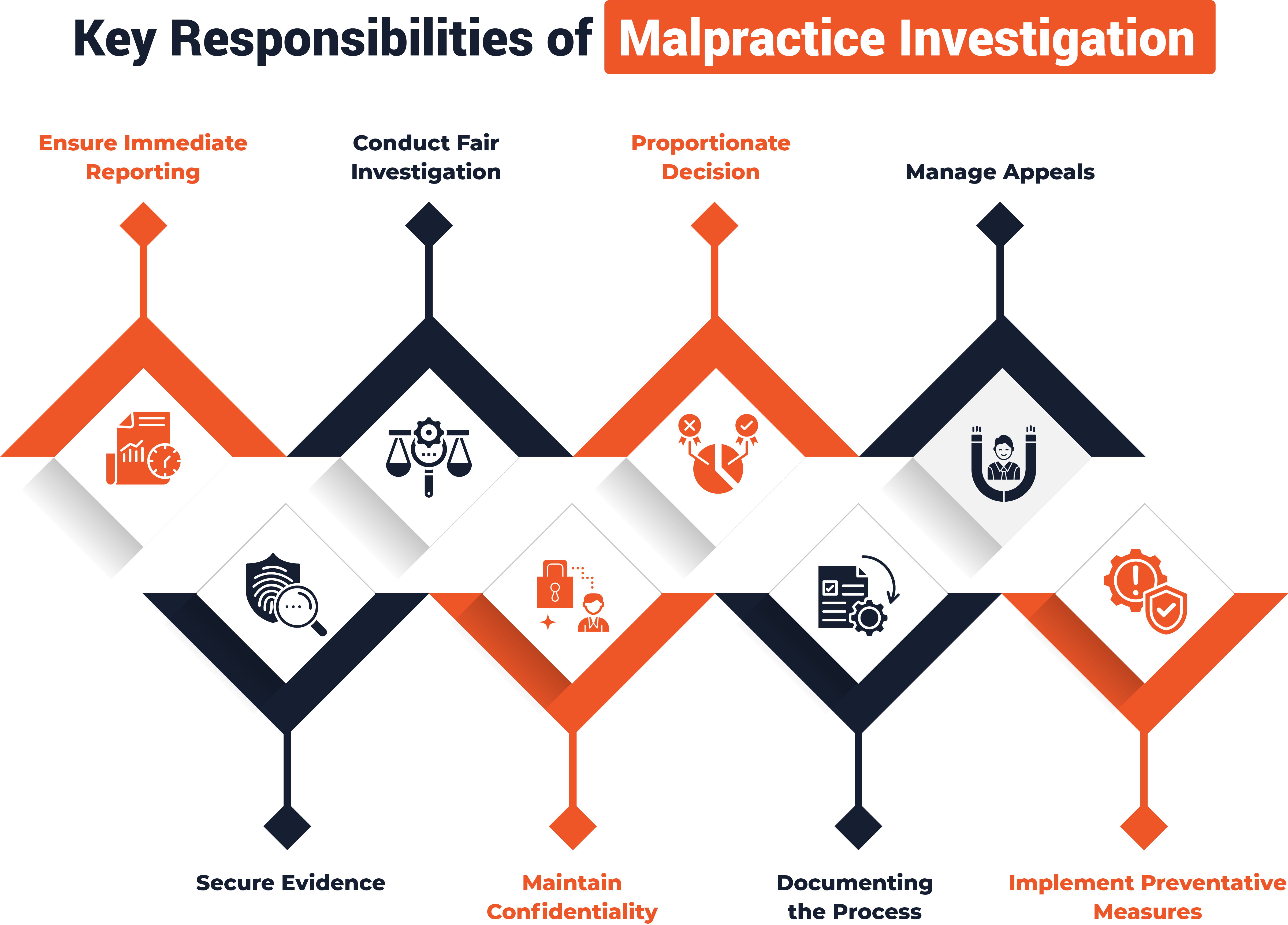
Ensure Immediate Reporting
When malpractice is suspected, delay can worsen the situation. Immediate reporting ensures that evidence is preserved and risks are contained. Staff must know exactly who to inform.
Serious cases must be reported to the awarding body when a regulated qualification is involved. Failing to escalate serious concerns can itself become a compliance issue. Prompt reporting demonstrates transparency and protects the credibility of the qualification.
Secure Evidence
Once an allegation is raised, all relevant materials must be protected. This may include learner scripts, coursework files, assessment feedback forms, emails, digital submissions, or examination access logs.
The aim is to prevent tampering or accidental alteration. A clear chain of custody must be maintained so that evidence remains reliable and defensible upon external review.
Conduct Fair Investigation
A malpractice investigation should follow a structured process rather than informal discussions. This includes reviewing documentary evidence, conducting interviews, and gathering written statements.
Those accused must be informed of the allegation and given the opportunity to respond. Decisions should be based on verifiable facts, making the process balanced and defensible.
Maintain Confidentiality
Malpractice allegations can damage reputations even before findings are confirmed. Therefore, information must only be shared with individuals who have a legitimate role in the investigation.
Confidentiality protects learners, staff and whistleblowers. It also ensures compliance with data protection legislation. Breaches of confidentiality can lead to legal risk and loss of trust within the institution.
Proportionate Decision
After reviewing all evidence, decision-makers must determine whether malpractice occurred and assess its severity. It is essential to distinguish between deliberate misconduct and unintentional error (maladministration).
Sanctions should be proportionate. For example, minor first-time learner plagiarism may warrant resubmission with guidance, whereas systemic falsification of records could lead to disciplinary action or reporting to regulators. Consistency in applying sanctions ensures fairness across cases.
Documenting the Process
Comprehensive documentation is essential. Every stage, from initial concern to final outcome, should be recorded. This includes investigation plans, interview notes, evidence logs, decision rationales and communications. Clear documentation ensures accountability and provides protection if the case is reviewed during an audit, an appeal, or a regulatory inspection.
Manage Appeals
Individuals accused of malpractice have the right to challenge decisions. A fair appeals process should be clearly outlined in institutional policy. Appeals should be reviewed independently, ideally by someone not involved in the original investigation. This reinforces transparency and ensures procedural fairness. Properly managed appeals reduce the risk of disputes escalating further.
Implement Preventative Measures
An investigation should lead to organisational learning. After resolving a case, institutions should review whether policies, training or monitoring systems require improvement.
This may involve additional staff training, strengthening Internal Quality Assurance sampling, clarifying AI-use policies, or updating malpractice procedures. Prevention reduces recurrence and strengthens overall governance.
Become a Certified Investigator!
Gain recognised expertise in compliance with Level 4 Certificate in Investigating Malpractice and Maladministration in Education.
Step-by-Step Procedures for Investigating Malpractice
Investigating malpractice requires a structured investigation. The following is the step-by-step procedure which can be followed to investigate malpractice.
- Initial Identification and Reporting
Malpractice often begins with small indicators: unusual similarities between assignments, inconsistent assessment records, altered documentation, or unexplained grade changes. Staff should be trained to identify these warning signs early.
Institutions must have a clear and confidential whistleblowing policy. Staff and learners should know how to report concerns safely, without fear of retaliation. Transparent reporting channels encourage accountability and support a culture of integrity.
- Preliminary Review
Before launching a full investigation, a preliminary review determines the seriousness of the allegation. The goal is to establish whether formal investigation procedures are required. At this stage, all relevant evidence must be preserved. Protecting evidence early ensures that findings are based on reliable and untampered information.
- Formal Investigation
A suitable and unbiased individual must lead the investigation. They should have knowledge of assessment regulations and institutional policy, but no direct involvement in the case. Independence ensures credibility and fairness.
The investigator collects all relevant materials, including learner submissions, marking records, communication logs and policy documents.
Interviews should be documented carefully, and statements should be factual and signed where appropriate.
Information must be restricted to authorised individuals only.
- Decision-Making and Outcomes
Once evidence is reviewed, decision-makers determine whether malpractice occurred and assess its severity. Sanctions must reflect the seriousness of the offence and consider intent, impact and previous conduct.
Consistency with national standards protects qualification credibility.
- Report to Awarding Bodies
Serious cases, especially those affecting regulated qualifications, must be reported to the relevant awarding organisation. Failure to report mandatory cases can result in compliance action against the centre.
Awarding bodies typically require a detailed report, including timelines, evidence summaries, interview notes and the final decision. Clear documentation supports transparency and regulatory compliance.
- Appeals Process
Individuals have the right to challenge decisions through an established appeals procedure. Institutions must inform them of this right and provide clear guidance on how to proceed. Appeals should ideally be made by someone not involved in the original investigation. This safeguards impartiality in the institution's governance processes.
Conclusion
Investigating malpractice in education is not simply about responding to misconduct. It is about protecting the integrity of qualifications, maintaining public confidence and ensuring fairness for every learner. A structured approach, grounded in transparency, impartiality and regulatory compliance, allows institutions to address concerns effectively without compromising natural justice. A robust malpractice framework demonstrates that standards matter. It reassures that qualifications are awarded fairly, ethically and in line with national expectations.



.png)