 WhatsApp Us


Early-year child practitioners should adopt a holistic approach that recognises how different areas of development work together. Supporting holistic child development in early years requires more than focusing on individual milestones.
Key Takeaways:
- Holistic development in the early years supports children across interconnected areas, physical, cognitive, linguistic, social, emotional, and spiritual development.
- Practitioners play a central role by creating supportive environments, observing children closely, and responding intentionally through everyday interactions and play.
- Strong partnerships with parents and carers ensure consistency between home and early years settings, helping children feel secure, confident, and ready to learn.
This approach is closely aligned with the Early Years Foundation Stage (EYFS), which recognises that children develop across areas in an interconnected and holistic way. The early years are a critical period in a child's life. During this time, children develop physical abilities, cognitive skills, emotional awareness and social behaviours that shape their future learning and wellbeing. All of these aspects of development are interconnected, which means progressing in one area helps develop the other as well.
Holistic development in the early years means supporting children as whole individuals. When practice reflects this connection, children are more likely to feel confident, engaged and ready to learn.
This blog will help early years practitioners to strengthen their everyday practice using practical ways to support holistic development through play, relationships, observation and inclusive environments.
What Is Holistic Development in the Early Years?
Holistic development in the early years refers to the support of a child's overall growth. It targets all development domains simultaneously, rather than focusing on one area at a time. For example, a child's emotional security can influence their ability to communicate, explore and engage in learning. Practitioners observe children carefully and plan experiences that support multiple areas of development together.
Focusing only on individual milestones can limit understanding of a child's needs, as progress in one area often depends on development in others. A holistic approach allows practitioners to respond more effectively to the child as a whole.
The key principles of holistic development centre on a whole-child approach that values consistency and responsiveness. Practitioners adapt their interactions and activities to meet individual needs. holistic development becomes part of daily practice by focusing on everyday experiences such as play, routines and relationships.
Six Core Areas of Holistic Development
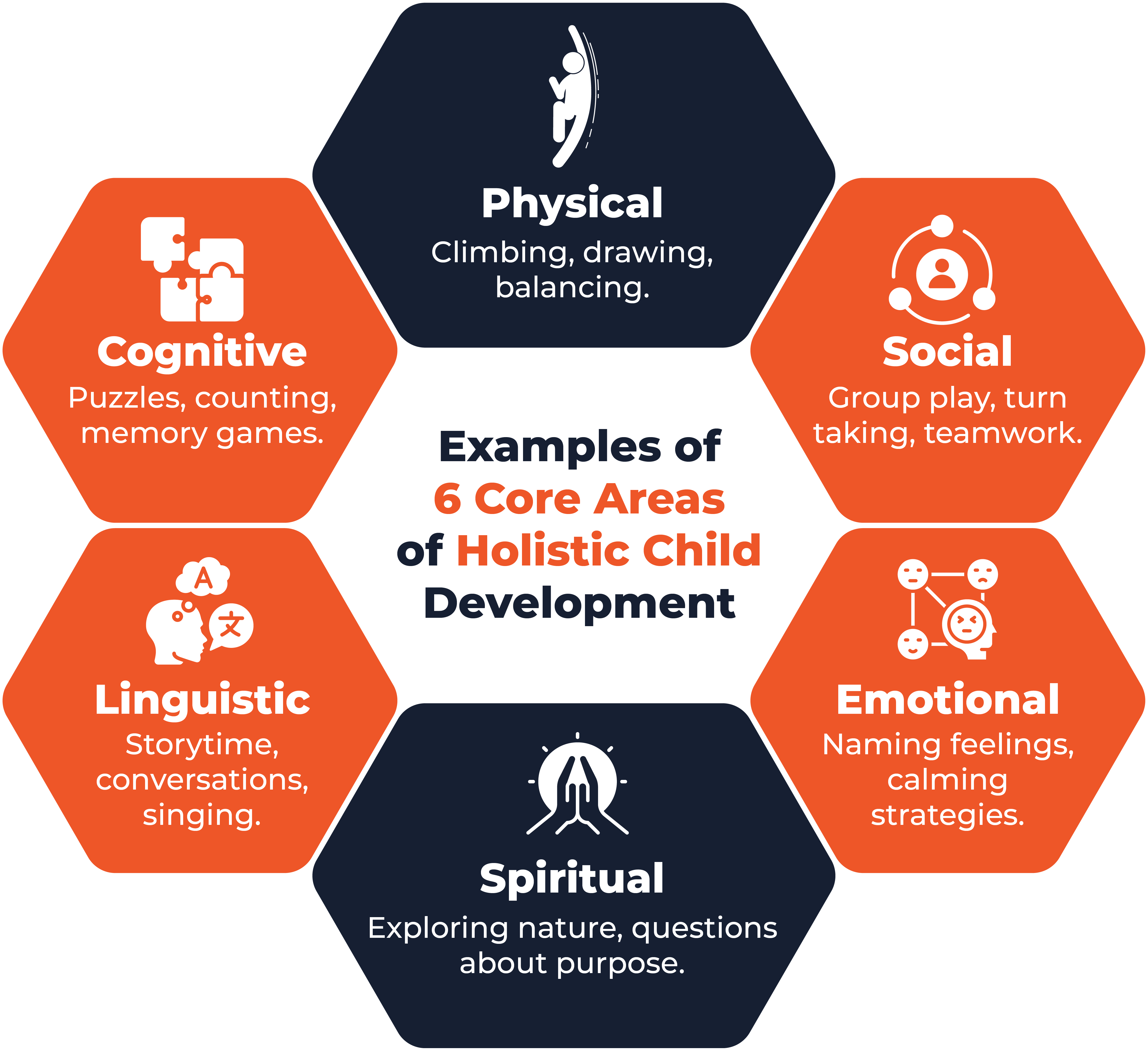
There are six core developmental areas that together support a child's overall growth. These include physical, cognitive, linguistic, social, emotional and spiritual development.
Holistic practice is based on the understanding that these areas do not develop separately. Instead, they influence one another continuously, shaping how children learn, behave and interact with the world around them. A balanced approach ensures that no single area is prioritised at the expense of others.
Physical Development
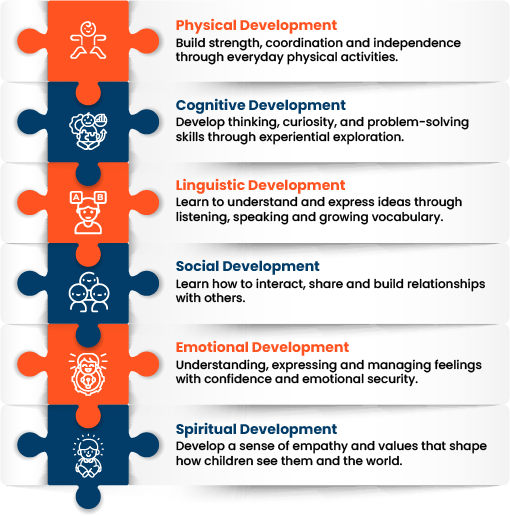
Physical development involves the growth of both gross and fine motor skills. This enables children to move confidently and handle objects with increasing control. Activities such as running, climbing, drawing, self-care and tool use support coordination, strength, independence and dexterity. Through movement and manageable physical challenges, children develop body awareness, confidence and control, which also supports learning in other areas.
Cognitive Development
Cognitive development relates to how children think, understand and make sense of their experiences. In the early years, this includes early reasoning, problem-solving, memory and the development of language and communication. Everyday interactions help build strong foundations for early literacy.
Curiosity and exploration are key drivers of cognitive growth. When children are encouraged to ask questions and learn through experiments, they develop the ability to think critically and make connections. Play-based learning facilitates natural and meaningful cognitive development. While cognitive development supports thinking and understanding, linguistic development focuses more specifically on how children communicate their thoughts and ideas.
Linguistic Development
Linguistic development focuses on how children understand and use language to communicate. This includes listening, speaking, vocabulary growth and early awareness of sounds and patterns in language. Language development is closely connected to social and emotional growth. When children feel heard and understood, they are more likely to express their thoughts and engage fully in learning experiences.
Social Development
Social development focuses on how children form relationships and interact with others. In early years settings, children learn to engage with peers and adults. This develops cooperation, sharing and turn-taking skills in them. These interactions help children understand social expectations and build communication skills.
Being part of a group also supports a child's sense of belonging. Positive social experiences help children feel included and valued, strengthening their confidence.
Emotional Development
Emotional development involves recognising, expressing and managing feelings. Children gradually learn to identify emotions in the early years and to develop strategies to cope with frustration, change and challenge. Supportive guidance from practitioners plays a key role in this process. Stable, trusting relationships provide the emotional security children need to explore and learn.
Spiritual Development
Spiritual development in the early years is not linked to religion. Spiritual development in the early years relates to a child's sense of self, curiosity and awareness of the world around them. It includes developing values such as kindness, respect and empathy. Supporting spiritual development does not require formal instruction. Instead, it involves creating opportunities for children to ask questions, express feelings and develop an understanding of themselves and others. These experiences help children build a sense of purpose and emotional depth that supports overall well-being.
What is The Role of Practitioners in Supporting Holistic Development?
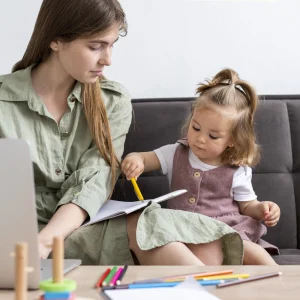
Practitioners support holistic development in early years by going beyond planned activities to influence children's learning through everyday interactions. Early childcare practitioners observe children closely to understand their interests and needs. This information helps them to provide intentional support that guides development across multiple areas. Practitioners provide a well-designed learning environment, creating an inclusive, stimulating, and safe space that encourages children to explore, experiment and engage in meaningful play. They build trust and help children feel secure as they explore different areas of development.
This process is strengthened through regular observation, assessment, planning, and review, ensuring that practice remains responsive and child-centred.

How Practitioners Work in Partnership with Parents and Carers?
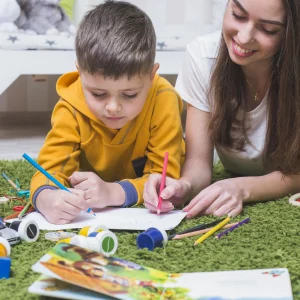
Holistic growth in early years is most effective when a child's practitioner and parents work in partnership. Children thrive with consistent learning and care across home and early years settings. Early-year care providers and parents' collaborative approach ensures that a child feels secure and confident in a learning environment.
An effective partnership between parent and practitioner depends on clear, respectful communication and mutual trust. They can share progress, celebrate achievements and discuss areas where a child needs to improve. This may include regular conversations, shared learning journals, or exchanging information about learning and routines at home and in the setting.
This way, a constant supportive environment is created that promotes holistic development in early years.

Conclusion
Supporting holistic child development in the early years requires a balanced and thoughtful approach that recognises the close interconnections among developmental areas. A practitioner will help in the sustained development of a child as a whole individual, rather than taking it as a collection of milestones. By creating supportive environments and working in partnership with parents and carers, practitioners play a vital role in nurturing holistic development. Everyday activities become powerful opportunities for learning and initial development. When practice remains, consistent children are more likely to feel secure and ready to grow.

.png)