 WhatsApp Us



Artificial intelligence can be balanced with academic integrity by adding limitations to its use. AI is now a familiar part of modern education. AI-powered tools have unlocked new opportunities for learning.
Key Takeaways:
- AI can ethically support learning, from brainstorming ideas and revision planning to improving writing clarity and understanding complex topics.
- Non-responsible AI assistance and practices raise academic integrity concerns or breach institutional policies.
- Learners can benefit from AI with its ethical use that strengthens the critical thinking, research skills, problem-solving, and independent thinking.
AI assistance has sped up tasks that used to take hours to complete. Some of the academic work, such as planning or searching, has now become much more efficient and is encouraged to use AI assistance.
Artificial intelligence has become a familiar part of modern education. Students use AI-powered tools to organise study schedules, understand difficult concepts, improve writing, and support research. What once seemed like a future technology is now readily available to learners at every level of education.
AI has made learning more accessible by providing instant explanations, generating practice questions, and identifying areas for improvement. At the same time, the increased accessibility of AI has raised important questions about academic integrity.
Educational institutions are working to determine where the line should be drawn between acceptable assistance and inappropriate reliance on technology.
This blog explores how students can benefit from AI assistance without compromising academic integrity.
What Is Academic Integrity?
Academic integrity means completing your academic work honestly and ethically. It involves presenting your own ideas, acknowledging others' work, and following your institution's rules.
Academic integrity is all about avoiding plagiarism and cheating while building trust and demonstrating genuine learning.
The Core Principles of Academic Integrity
- Honesty: Be truthful about the work you submit and the sources you use.
- Trust: Academic communities rely on students and educators to act with integrity and confidence in each other's work.
- Fairness: Everyone should be assessed by the same standards and have an equal opportunity to succeed.
- Respect: Respect the ideas, research, and contributions of others by giving proper credit.
- Responsibility: Take ownership of your learning and make ethical decisions when completing assignments and assessments.
- Courage: Make ethical choices even when facing pressure, challenges, deadlines, or opportunities to take shortcuts.
When AI Use Becomes an Academic Integrity Concern?
Use of AI is problematic when it undermines the purpose of education. Academic assessments are designed to measure a student's knowledge and understanding. When AI begins to do the work that students are expected to complete themselves, concerns about academic integrity arise.
Submit AI-Generated Content as Your Own
One of the most common academic integrity concerns is students submitting AI-generated responses. Learner avoids making their own contribution to the work.
Assignments are intended to demonstrate a student's understanding of a subject. Presenting AI-generated content as original work can misrepresent a student's abilities. It also violates many institutions' AI policies.
Use AI to Complete Entire Assignments
Using AI to generate a complete essay, report, project, or assignment strips students of the chance to develop their research, critical and problem-solving skills. This is why AI must be used only as a learning tool.
Many institutions' AI policies prohibit the use of AI as a writing tool because it will no longer reflect the students' own effort.
Fail to Acknowledge AI Use
Some institutions permit certain forms of AI assistance but require students to disclose it. Students have to attach a written AI declaration statement of how they used AI at any stage of the assignment.
Failing to disclose AI use raises academic integrity concerns, even if AI use is allowed. The institution's guidance on disclosure and citations must be followed.
Rely on AI Without Verifying Information
AI tools can generate false information convincingly. Oftentimes, AI provides outdated information, incorrect facts, fabricated references, or misleading explanations.
Students who use AI to complete their research project without consulting research papers and reports risk submitting inaccurate work. This weakens the quality of the assignments.
Allowing AI to Replace Critical Thinking
The purpose of education is to analyse information, evaluate evidence, solve problems, and form independent conclusions. AI can minimise learning when you depend on it for every decision. This limits the development of important academic and professional skills.
Gain expertise in compliance!
Start Level 4 Certificate in Investigating Malpractice and Maladministration in Education.
Enrol NowWhen AI Assistance Supports Learning Ethically?
AI can be a valuable educational tool when it supports learning rather than replacing it. Ethical AI use helps students develop knowledge, strengthen skills, and improve understanding while ensuring that the final work reflects their own effort and abilities.
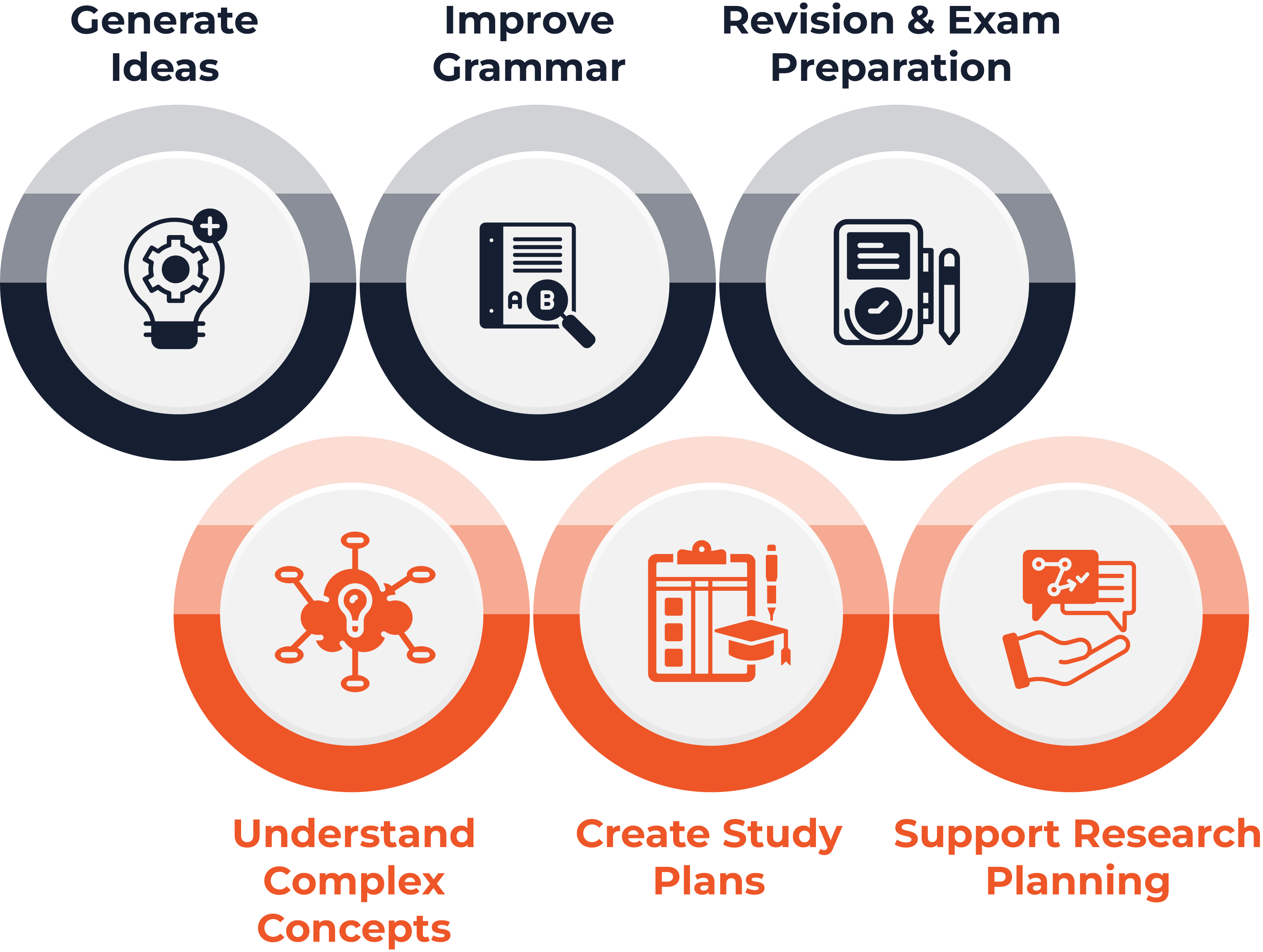
Generate Ideas
Many students use AI during the early stages of an assignment. At this stage, AI can help to explore potential topics or identify different perspectives on a subject. This can be particularly helpful when starting a project or overcoming writer's block.
Using AI to generate ideas is generally considered ethical in most institutions. Students must ensure they are responsible for researching, analysing, and developing those ideas independently.
Improve Grammar
AI tools can help students identify unclear sentences, awkward phrasing, or grammatical errors. It is important to treat AI as a proofreading tool.
Please review the changes and suggestions that AI provides, as they might sometimes hide some of the subtlety in academic work. Remember, you can keep your own style and voice in your assignments by using AI mainly for proofreading help, rather than relying on it to write for you.
Revision and Exam Preparation
AI can support revision by generating practice questions, quizzes, flashcards, and study summaries. It can also help students identify knowledge gaps and focus on areas that require additional attention. AI beings used as learning aids support preparation.
Understand Complex Concepts
Some subjects are based on theories, calculations, research work, or technical ideas. Students may find it difficult to understand. AI can provide simplified explanations and step-by-step breakdowns that make challenging topics more accessible.
However, students should always verify important information using reliable academic sources, as AI-generated explanations may sometimes contain inaccuracies.
Create Study Plans
Effective learning thrives in an organised environment when time is well managed. AI can be a great companion in this journey by crafting personalised study plans and setting up realistic revision schedules.
This keeps everything in order while happily taking charge of your learning and academic success.
Support Research Planning
AI can help identify relevant research areas, generate potential research questions, and suggest keywords for literature searches. These suggestions provide a useful starting point for further investigation. This way, learners can speed up the initial process and save time for detailed research.
This must be treated as an initial step; for further research, learners must apply their problem-solving and critical-thinking skills.
Building Good Academic Habits in the Age of AI
As AI becomes more integrated into education, students need habits that support both effective learning and academic integrity. The following practices can help you use AI responsibly while continuing to develop the skills that education is designed to build.
- Start assignments with your own research and ideas before turning to AI for support.
- Verify facts, statistics, quotations, and references using credible academic sources.
- Keep a record of drafts.
- Use AI to clarify concepts, not to complete assessed work for you.
- Develop the habit of questioning information rather than accepting every AI-generated response at face value.
- Read books, journals, articles, and research papers whenever possible.
- Maintain records of your research process and assignment development.
- Strengthen your writing skills by practising regularly instead of relying on AI to rewrite everything.
- Understand your institution's AI policy before using AI tools for coursework or assessments.
- Take time to reflect on what you have learned rather than focusing only on completing tasks quickly.
- Cite sources accurately.
- Use AI as a learning aid, not a shortcut.
- Build independent critical thinking skills that allow you to analyse evidence, form arguments, and reach your own conclusions.
- Review and edit all AI-assisted content so the final work reflects your own understanding and academic voice.
Conclusion
AI is changing the traditional education system. Students are learning new ways to learn, research, and prepare for assessments. It must be used as an assistive tool rather than as a replacement for the effort, critical thinking, and independent work that education aims to develop.
The key to balancing AI assistance with academic integrity is using technology ethically. Learners must understand institutional expectations and ensure that their work reflects their abilities.



.png)