 WhatsApp Us


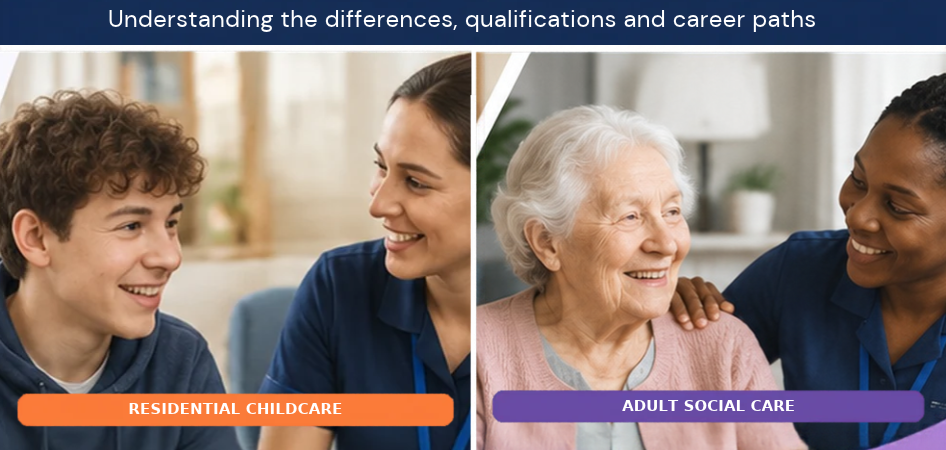
Choosing a career in care can be rewarding, but it is important to understand which area suits your interests and skills. Two popular career options in the UK are residential childcare and adult social care. Both involve supporting people who need additional care, but their responsibilities, working environments and professional requirements are different.
At a Glance
- Children's homes help young people feel safe, learn and build trust.
- Adult care helps people with daily tasks while respecting their choices.
- Residential childcare workers focus on child development, safeguarding, emotional wellbeing and positive relationships.
- Adult care workers support people with everyday activities, personal care, disabilities, dementia and other needs.
- The Level 3 Diploma for Residential Childcare is an important qualification for people working in children's homes in England.
- The Level 3 Diploma in Adult Care can help care professionals develop their knowledge and progress into senior care roles.
Residential childcare and adult social care are two important areas of the UK care sector, but they serve different needs. Understanding these differences can help you choose the right career path, training and professional qualification.
If you are considering a career in either sector, this guide explains the main differences, daily responsibilities, qualifications, salaries and career opportunities in the UK.
How Residential Childcare and Adult Social Care Differ at the Core
Residential childcare supports children and young people who cannot live at home safely, whether for a short time or over a longer period. This may be due to neglect, abuse, family breakdown, complex behaviour, disability or other safeguarding concerns.
The work is shaped by child development, education, emotional stability and safeguarding. Staff are not only meeting basic needs but also helping young people grow, establish routines and build healthy relationships.
Adult social care supports adults with care needs linked to disability, illness, ageing, mental health conditions or reduced independence. The focus is usually on choice, dignity, individual rights and practical help with everyday life.
Adults are generally supported to make their own decisions wherever possible. This influences how care is planned, recorded and reviewed.
Residential Childcare vs Adult Social Care: Key Differences
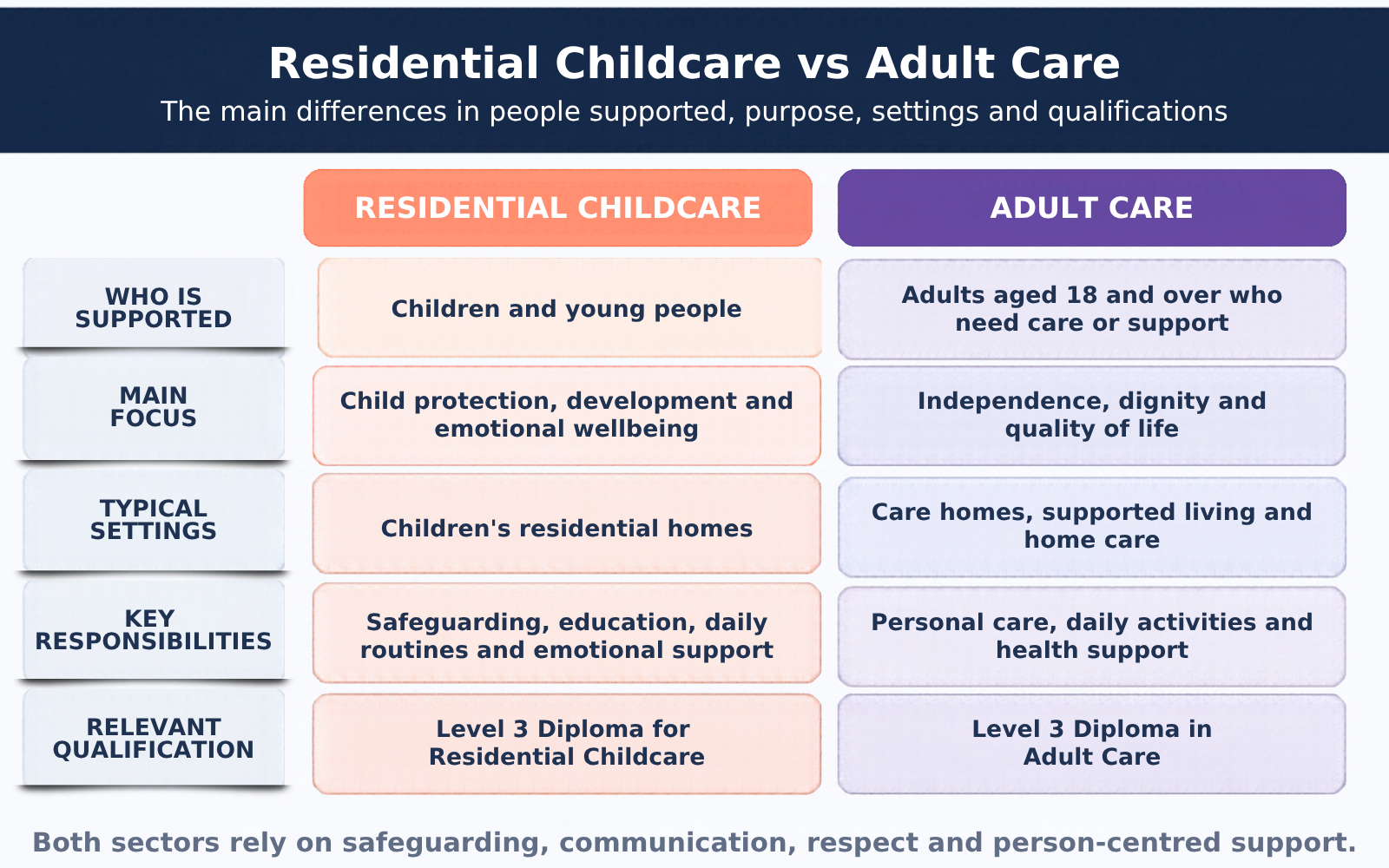
Although both sectors involve care and safeguarding, they support different age groups and have different professional responsibilities.
|
Area |
Residential Childcare |
Adult Social Care |
|
People supported |
Children and young people |
Adults aged 18 and over |
|
Main purpose |
Child protection and development |
Independence and wellbeing |
|
Working environment |
Children's residential homes |
Care homes, supported living and home care |
|
Main responsibilities |
Education, emotional support and safeguarding |
Personal care, daily activities and health support |
|
Relevant qualification |
Level 3 Diploma for Residential Childcare |
Level 3 Diploma in Adult Care |
|
Career opportunities |
Residential childcare worker, senior worker and children's home manager |
Adult care worker, senior care worker and care manager |
The biggest difference is the type of support provided. Residential childcare workers focus on children's development, safety and emotional wellbeing. Adult care workers help individuals maintain independence and manage everyday activities.
However, both professions require good communication, safeguarding awareness, professionalism and compassion.
What Does a Residential Childcare Worker Do?
In residential childcare, staff often work in children's homes or short-term residential placements. The environment is structured, with routines around school, meals, homework, appointments and contact with family.
A residential support worker may help manage challenging behaviour, resolve conflict and act as a key worker for one or more young people.
The role can be emotionally demanding because some children may struggle to trust adults or accept boundaries after difficult experiences.
Workers aim to provide a stable environment where children feel safe, develop confidence and build positive relationships.
What Does an Adult Care Worker Do?
In adult social care, the working environment is broader. An adult care worker may work in residential care, supported living, extra care housing or community-based services.
Daily work can include personal care, meal support, assistance with medication where authorised and encouraging individuals to complete tasks independently.
In supported living, the aim is often not to do everything for a person but to help them develop skills for independent living.
In both sectors, care plans, risk assessments and person-centred approaches guide decisions. However, the goals of these plans differ according to the individual's needs.
Responsibilities Shared by Both Roles
Despite their differences, residential childcare workers and adult care workers share several responsibilities. These include maintaining accurate care records, communicating important information during shift handovers, following care plans and responding calmly to changes in someone's health, behaviour or safety.
That overlap is why some professionals move between sectors. Still, the pace, working relationships and support goals can feel very different in practice.
Safeguarding and the Children's Homes Regulations 2015
Safeguarding is essential in both residential childcare and adult social care. However, professionals must follow the legal requirements relevant to their working environment.
In England, the Children's Homes (England) Regulations 2015 establish standards that registered children's homes must meet. These include protecting children from harm, supporting their education and wellbeing, promoting positive relationships and involving children in decisions about their care. The regulations also set requirements for staff qualifications and professional competence.
For adults, safeguarding focuses on protecting individuals from abuse, neglect and exploitation while respecting their rights, choices and independence.
Workers in both sectors must recognise safeguarding concerns, report risks appropriately and maintain professional boundaries.
Skills, Qualifications and Training Needed for Care Work
Employers in both sectors look for communication skills, teamwork, patience and the ability to remain calm under pressure. Workers also need sound judgement, professional boundaries and accurate record-keeping skills.
In childcare settings, staff may also need a stronger grasp of child development and how to support holistic child development, because progress is often measured across behaviour, learning, health, and social growth. In adult care, a common option is the Level 3 Diploma in Adult Care. Training usually covers safeguarding, health and safety, first aid, mental health support awareness, moving and handling, and professional boundaries.
Care workers must also maintain accurate records and share important information with their colleagues. Clear communication helps ensure that individuals receive safe and consistent support, especially when staff change shifts.
While some employers welcome people with no previous care experience, recognised qualifications can help workers develop their knowledge, improve their practical skills and progress into more senior roles.
STRONG CARE WORK DEPENDS ON PEOPLE'S SKILLS AS MUCH AS FORMAL LEARNING.
What Qualifications Do You Need for Residential Childcare and Adult Social Care?
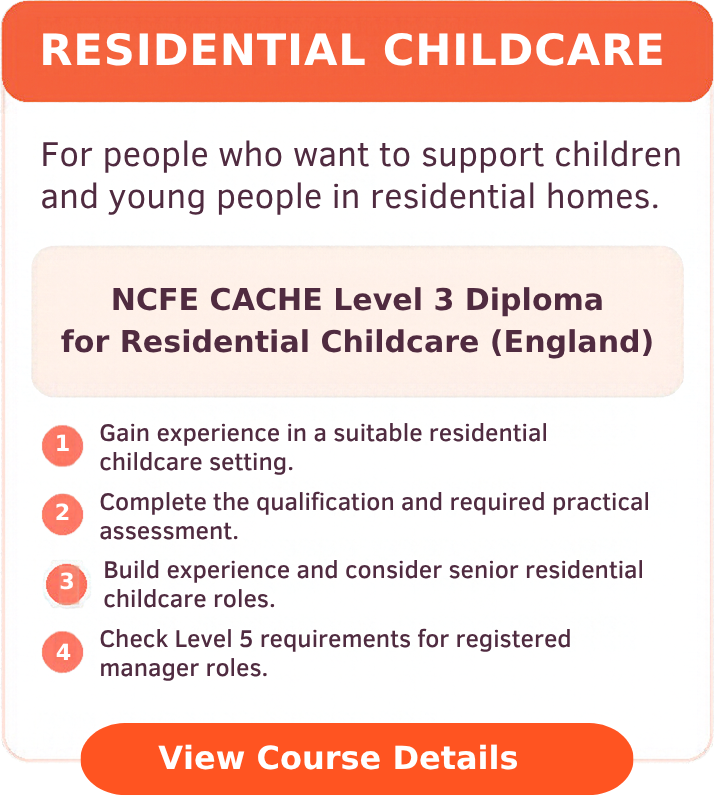
Level 3 Diploma for Residential ChildcareA recognised qualification for people working in children's homes is the Level 3 Diploma for Residential Childcare. The qualification covers safeguarding, child development, risk management, communication, emotional wellbeing and supporting positive relationships. In England, care staff working in registered children's homes are generally required to achieve the Level 3 Diploma for Residential Childcare or an accepted equivalent within two years of starting their role, subject to the relevant regulations. School of Academics offers the NCFE CACHE Level 3 Diploma for Residential Childcare (England). This Ofqual-regulated qualification is delivered online with tutor support and requires access to a suitable residential childcare setting for practical assessment. |
|
Ready to Build Your Career in Residential Childcare?
Develop the knowledge and practical skills needed to support children and young people in residential settings.
Explore the NCFE CACHE Level 3 Diploma for Residential Childcare
|
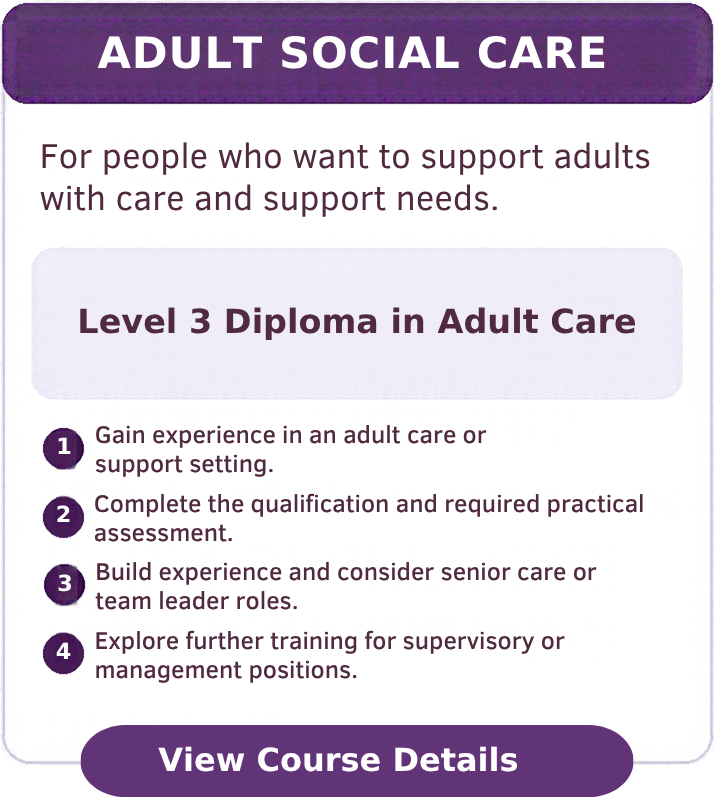
Level 3 Diploma in Adult CareFor those interested in adult care, a common qualification is the Level 3 Diploma in Adult Care. The course develops knowledge of person-centred care, safeguarding, communication, health and safety, dementia and supporting individuals with different care needs. School of Healthcare offers the Focus Awards Level 3 Diploma in Adult Care, an Ofqual-regulated qualification designed for people working in adult social care or preparing for more responsible roles. The course includes online learning and practical assessment requirements. What is a Level 3 Diploma in Adult Care |

Career Opportunities and Salaries in the UK
Residential childcare and adult social care both offer opportunities for professional growth.
If you are applying for your first job in social care, focus on practical evidence from your life or work. Employers value examples of staying calm, helping others, keeping boundaries, and working reliably in a team. If you later want to support others through learning in the sector, it can help to understand the process of teaching and learning and routes such as a Level 3 Award in Education and Training.
With suitable qualifications and experience, residential childcare professionals may progress into senior residential childcare worker, deputy children's home manager or registered manager positions.
The Level 5 Diploma in Leadership for Health and Social Care and Children and Young People's Services and Level 5 Diploma in Leading and Managing an Adult Care Service are relevant qualifications to the both sectors for people progressing towards registered management roles in England.
Adult social care professionals can explore roles such as care worker, support worker, senior care worker, team leader and care home manager. Read our blog Career Progression Routes in Adult Care for further information
How Much Do Care Workers Earn in the UK?
Salary is another factor people consider when choosing between these sectors.
Earnings depend on location, employer, experience, qualifications, responsibilities and working hours.
The National Careers Service provides the following indicative annual salary ranges:
|
Job Role |
Starter Salary |
Experienced Salary |
|
Care worker |
£20,000 |
£25,000 |
|
Residential support worker |
£22,000 |
£30,000 |
These are general career-profile estimates rather than guaranteed salaries for every position.
A residential childcare worker salary may vary between local authority and private children's homes. Additional responsibilities, qualifications and shift patterns can also influence earnings. Similarly, adult social care salaries differ across residential care, home care and supported living services.
For current salary information, compare recent job advertisements and consult the National Careers Service.
Choosing Between Residential Childcare and Adult Care Work
If you are drawn to helping children recover from difficult experiences, residential childcare may suit you. If you prefer helping adults maintain control over their daily lives, adult social care may be a better fit.
Neither role is necessarily easier. They are demanding in different ways.
Residential childcare can be emotionally challenging because young people may have experienced trauma, loss or repeated placement changes. Progress may come through small achievements, such as attending school regularly or managing a difficult situation more confidently.
Adult care work can also be demanding, particularly when supporting people with dementia, long-term illness or end-of-life needs. However, the approach is often more focused on enabling independence and respecting individual choice. Adult Care is a Rewarding Career Choice
Most care roles involve shift patterns, which may include evenings, weekends, sleep-ins and bank holidays. Resilience and flexibility are therefore important in both sectors.
If you are applying for your first job in social care, focus on practical examples of communication, teamwork, responsibility and staying calm under pressure.
Before choosing a qualification, consider which age group you want to support, the responsibilities you feel comfortable taking on and your long-term career goals.
The best career path often depends on what type of support work feels meaningful to you.
Frequently Asked Questions
Final Thoughts: Choosing the Right Care Path
Residential childcare and adult social care both require patience, professional skills and trust. However, they support different people, needs and daily routines.
Residential childcare focuses on helping children develop safety, trust and emotional stability. Adult social care places greater emphasis on independence, dignity and everyday living.
Both sectors offer opportunities to make a meaningful difference and develop a long-term career.
Whether you are interested in supporting children or adults, choosing the right professional qualification can help you build the knowledge and confidence needed for your role.
Explore the Level 3 Diploma for Residential Childcare through School of Academics or the Level 3 Diploma in Adult Care through School of Healthcare to take the next step in your care career.